


ARTICLE
EUDR: a key regulation in the fight against deforestation for your purchasing and sourcing teams.
Published on 15/03/2025 - 10 minutes reading time
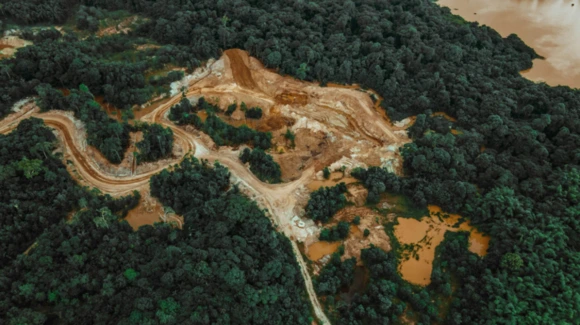
Regulation (EU) 2023/1115, known as the EUDR, aims to prevent products that have contributed to deforestation or forest degradation from being placed on the market or exported from the European Union. This Regulation imposes compliance obligations on a wide range of companies operating within the European Union. Initially scheduled for 30 December 2024, the date of entry into force has been postponed to 30 December 2025 for large companies and to 30 June 2026 for SMEs and micro-enterprises. From these dates onwards, the companies concerned will have to demonstrate full traceability of their supply chains and implement due diligence to ensure that their products do not contribute to deforestation.
What is due diligence under the EU DR?
It is a three-step process that companies must follow before importing or selling their products:
- Gathering information
- Verify the origin of the products (e.g. country, region, farm).
- Gather evidence that production does not cause deforestation after 31 December 2020.
- Obtain GPS coordinates of the plots where the products come from.
- Risk assessment
- Analyse whether the product poses a risk of contributing to deforestation.
- Verify that it complies with the laws of the producing country.
- Consider factors such as corruption, lack of traceability, etc.
- Measures to reduce risk
- If a risk is identified, take action to minimise it (e.g. request more documentation, change suppliers, improve traceability).
- Importation is prohibited if the risk cannot be eliminated.
Which commodities are affected by the regulation?
The EUDR specifically targets the following commodities and their derivatives:
- Cattle: beef, leather, dairy products.
- Cocoa: cocoa beans, chocolate, food products containing cocoa.
- Coffee: coffee beans, ground coffee, coffee-based products.
- Palm oil: crude oil, food products, cosmetics, biofuels.
- Rubber: natural rubber, tyres, rubber products.
- Soya: soya beans, soya oil, animal feed, food products.
- Wood: raw wood, furniture, paper, wood-based products.
Why is the EUDR a strategic issue for your company?
Companies must integrate these new requirements now to avoid financial penalties and loss of access to the European market. But beyond the regulatory aspect, the EUDR represents a major opportunity to:
- Anticipate risks and avoid heavy penalties: Fines of up to 4% of turnover are envisaged in the event of non-compliance.
- Strengthen the traceability and resilience of your purchases by implementing effective due diligence.
- Secure your supply chains: Compliance requires detailed supplier mapping, which reduces supply risks and improves your company’s resilience.
- Create value by promoting your CSR commitment: By integrating a zero deforestation policy, you strengthen your sustainable positioning and meet the expectations of your customers, investors and stakeholders.
Who is affected by the EUDR within the company and who needs training?
The EUDR does not only concern regulatory teams! It affects several strategic functions within companies, all of which must develop their skills to ensure effective compliance.
🔹 CSR and Sustainable Development Managers: Integration of the EUDR into CSR strategy, reporting and communication on commitments.
🔹 Purchasers and Purchasing Departments: Securing supply chains, choosing suppliers and implementing contractual monitoring in accordance with the regulation.
🔹 Quality and Compliance Managers: Managing traceability, supplier audits and due diligence systems.
🔹 Legal and Compliance Departments: Anticipating legal risks, complying with reporting and verification obligations.
🔹 Supply Chain and Logistics: Adapting logistics processes and import flows to ensure compliance.
Anticipate to better prepare and achieve compliance
Implementing the EUDR requires a structured approach and specific skills. To anticipate risks, it is essential to thoroughly understand the requirements of the EUDR and to put appropriate compliance measures in place. Our training course, ‘Understanding the EUDR and its application’, is designed to provide you with the knowledge you need to:
🎯 Understand the regulation and its implications in detail
🎯 Implement a due diligence system to ensure the traceability of your products
🎯 Identify and assess the risks associated with deforestation in your supply chain
🎯 Develop strategies to mitigate these risks and ensure compliance
🚀 Join our next training session! 👉 EUDR Training – Understanding and Applying the Regulation
Don’t let the EUDR become an obstacle! Turn it into a strategic lever for your business and your CSR commitment.
Tailor-Made Solutions!
For support and training, discover our customized services.
